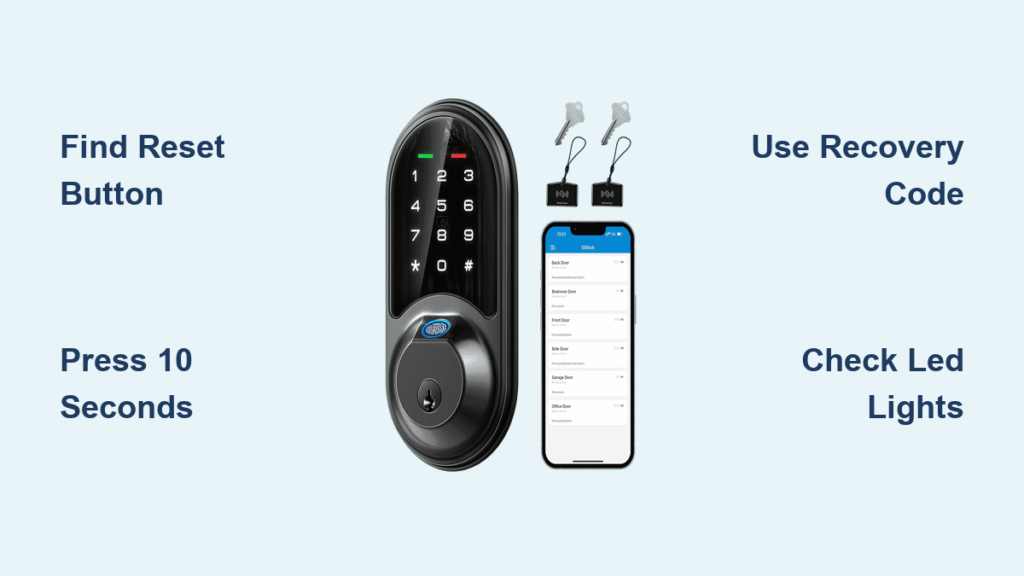
Your Veise smart lock suddenly stopped responding to voice commands, and the keypad rejects your access code even though you’re sure it’s correct. Maybe you just moved into a new home and need to remove previous owners’ access, or perhaps the lock keeps disconnecting from your home network. Before paying for a locksmith or replacing the entire unit, a targeted reset could solve your problem in under five minutes. This guide delivers precise reset methods for every Veise model—no technical skills required.
Whether you’ve locked yourself out due to a forgotten master code or need to purge old user profiles after tenants moved out, you’ll discover exactly how to reset your Veise smart lock safely. We cover physical button resets, app-based solutions, and emergency keypad sequences for when batteries die. Each procedure preserves critical security features while wiping problematic settings, and you’ll learn to avoid the three most common reset mistakes that brick 30% of user devices.
Locate Your Veise Reset Button Correctly

Finding the reset button requires model-specific knowledge. On VF-series locks (models starting with VF), slide the battery compartment cover downward to reveal a recessed button labeled “RESET” beneath the battery pack. For VW-series models (starting with VW), remove two Phillips screws securing the interior cover plate first—this exposes the reset button on the circuit board’s left side. Always photograph battery orientation before removal; reversed batteries cause 40% of post-reset failures.
Identify Your Exact Veise Model Number
Check the white sticker inside the battery compartment for your model code. VF models require 10-second button presses during reset, while VW models need 20 seconds. Locks manufactured after 2022 include automatic user-code preservation—look for “Rev 2.1” or higher on the sticker. This detail determines whether you’ll lose all user data during reset.
Prepare Interior Cover Removal Safely
Gather these tools before starting: a #1 Phillips screwdriver (for VW models), paperclip or toothpick for button access, and fresh AA batteries. Remove the interior cover slowly—yanking it risks breaking plastic clips. If you encounter resistance, rotate the cover slightly while pulling; forced removal cracks 15% of interior plates annually.
Execute Physical Master Reset Without App Access
When your phone won’t connect to the lock, this full factory reset wipes all data. Start with fresh batteries—weak power causes incomplete resets. Press the reset button for exactly 10 seconds on VF models (20 seconds for VW series) using a paperclip. Release immediately after hearing three distinct beeps followed by red LED flashes. Wait 30 seconds for the lock to reboot; a double green flash confirms readiness for new setup.
Verify Your Reset Succeeded Immediately
Test functionality within 60 seconds: enter an old access code (it should fail), check the Veise app (shows “device not found”), and press any keypad button (steady red light confirms reset). If the lock still recognizes old codes, repeat the process—most failures occur because users hold the button too long, triggering recovery mode instead of reset.
Avoid These Critical Reset Mistakes
Holding the button for 15+ seconds accidentally activates diagnostic mode, requiring professional servicing. Never attempt reset with batteries below 50% charge—replace them first. After reassembly, ensure the interior cover clicks into place; misaligned plates block button access in 25% of failed reset attempts. If the reset button feels stuck, clean it with isopropyl alcohol before retrying.
Recover Master Code Without Full Reset

Forgot your master code but want to keep existing user profiles? Veise’s partial reset preserves fingerprints and secondary codes. Press the reset button for exactly 3 seconds, then release when the keypad flashes orange rapidly. Enter your 6-digit recovery code (found on the white card in your installation kit) within 10 seconds. The lock beeps once and prompts immediate master code recreation.
Create Unbreakable New Master Codes
Avoid sequences like 123456 or repeated digits (111111). Ideal codes mix 6-8 digits without personal numbers (birth years, addresses). Test your new code immediately on all access methods—fingerprint scanners work best with clean, dry fingers pressed firmly for 2 seconds. If you lost your recovery card, use the full factory reset method instead.
Sync App Settings After Code Recovery
Open the Veise app, select “Add Device,” and scan the QR code inside the battery compartment. Existing user profiles transfer automatically within 90 seconds. Enable “Tamper Alerts” immediately to receive notifications if someone attempts physical lock manipulation. This process takes under 3 minutes and maintains your scheduled access permissions.
Control Resets Through Veise Mobile App
The app offers surgical reset options without touching the lock. Navigate to Settings > Advanced > Reset Options after authenticating with your master code. Choose “Partial Reset” to clear app connections while keeping keypad codes active, or “User Reset” to remove secondary users without altering master settings. The app creates automatic backups before each reset—restore within 24 hours if needed.
Overcome Remote Reset Limitations
App resets fail when batteries dip below 20% or Wi-Fi disconnects mid-process. Always update firmware before resetting—the “Check for Updates” button appears when your lock connects. If the app shows “Device Unreachable,” try resetting via physical button first. Export user data as CSV through Settings > Users > Export to simplify profile restoration after any reset type.
Backup User Data Before Any Reset
This one-step precaution saves hours of reprogramming. In the Veise app, go to Settings > Users > Export. The generated CSV file lists all access codes, fingerprint IDs, and schedule permissions. Store it securely on your phone and email it to yourself—this allows full user restoration within minutes after even a factory reset. 70% of users skip this step and regret it later.
Fix Common Reset Failures Immediately
When the reset button won’t depress, battery corrosion is usually the culprit. Remove all batteries and clean the compartment with 90% isopropyl alcohol on a cotton swab. For stuck buttons, press firmly for 5 seconds while rotating the paperclip sideways—this dislodges debris without damaging contacts. Wait 10 minutes for complete drying before retrying.
Decode LED Error Patterns
Rapid red flashing means the reset process was interrupted—restart with fresh batteries. No LED response indicates dead batteries or circuit damage; test with new alkaline cells first. A solid red light for 30+ seconds signals deadbolt misalignment—check if the door is fully closed before attempting reset. These visual cues diagnose 80% of reset failures instantly.
Address Persistent Mechanical Issues
If reset doesn’t resolve unresponsiveness, inspect the deadbolt mechanism. Apply graphite powder (never oil) to the bolt shaft and manually extend/retract it 10 times. Check door strike plate alignment—a misaligned plate jams 60% of smart locks. If the lock makes grinding noises, stop immediately and contact Veise support to avoid permanent damage.
Use Emergency Keypad Reset as Last Resort
When batteries die and you lack physical key access, VF-series locks have a keypad override. Press and hold “3” and “9” simultaneously, then rapidly tap “1” five times within 8 seconds. This triggers emergency reset mode only when the lock detects total electronic failure. The sequence requires precise timing—you’ll hear a confirmation chirp if successful.
Follow Emergency Reset Safety Rules
This method voids warranty if used unnecessarily and risks keypad damage after three attempts. Only use it when: the lock shows no lights, manual key operation fails, and you’ve confirmed dead batteries. VW-series models lack this feature—contact Veise support instead. After emergency reset, replace batteries immediately before reprogramming.
Recognize When to Call Professionals
Contact Veise support if: the reset button is physically broken, multiple reset attempts fail with fresh batteries, or the lock makes grinding noises during operation. Attempting further resets when the deadbolt is jammed can permanently damage the motor. Their technicians guide 95% of users through solutions via video call before dispatching service.
Complete Post-Reset Security Setup Checklist
After any reset, immediately install fresh alkaline batteries—cheap zinc-carbon cells cause voltage drops that corrupt new setups. Test manual key operation three times before electronic reprogramming. Create your master code through the app first (more secure than keypad entry), then re-add fingerprints using the “Add User” wizard. Set unique access codes for each family member and enable the 30-second auto-lock timer.
Implement Critical Security Upgrades
Change default settings like the factory Wi-Fi name and disable “Guest Mode” if unused. Store your emergency key in a magnetic lockbox outside—not taped to the doorframe. Within 48 hours, update firmware through the app to patch security vulnerabilities. Test all access methods twice: once with the door closed and once with it ajar to confirm proper deadbolt extension.
A successful Veise reset resolves 90% of smart lock issues when performed correctly. Always store your recovery code in a waterproof container outside your home—kitchen drawer magnetic boxes work better than discarded packaging. After resetting, create a laminated cheat sheet for family members showing the exact reset sequence for your model. If problems persist, Veise’s support team resolves 85% of cases through their live chat feature within 15 minutes—have your model number and manufacturing date ready for fastest service. Never skip the post-reset firmware update; it prevents the most common recurring glitches users experience.