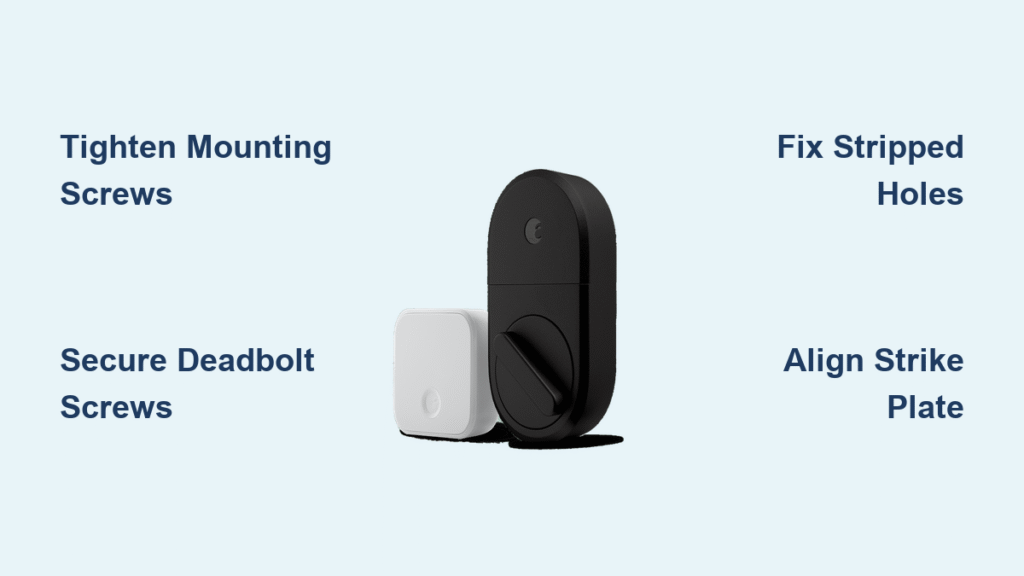
That annoying wiggle in your August Smart Lock isn’t just irritating—it’s a serious security risk. When your smart lock feels loose on the door, the deadbolt may not fully engage, leaving your home vulnerable. Plus, the motor has to work harder to turn a wobbly mechanism, draining batteries faster than normal. The good news? Most August Smart Lock tightening issues can be fixed in under 15 minutes with basic tools you likely already own.
If you’ve noticed your August lock rattling when the door closes or the deadbolt failing to catch properly, you need to address this immediately. This complete guide shows you exactly how to tighten August Smart Lock components in the right order, from the simplest fixes to more complex solutions. You’ll learn which screws matter most, how to identify stripped holes, and proven methods to prevent future loosening.
Fix Your Wobbly August Mounting Plate in Minutes
The mounting plate connects your August Smart Lock directly to your door. When this critical component loosens, the entire lock becomes unstable and may malfunction. This is the most common cause of August Smart Lock wobble and should be your first troubleshooting step.
Test Plate Movement Before Grabbing Tools
Before you start tightening anything, properly diagnose the issue. Firmly grasp your August lock body and gently try to wiggle it side to side. If the entire unit moves rather than just the outer ring, your mounting plate needs attention. Look closely for any gaps between the plate and door surface—visible spaces mean loose screws are compromising your security.
Critical warning: Never skip this diagnostic step. Tightening the wrong components can damage your lock or door. If only the outer ring wobbles, the issue likely involves internal components rather than mounting hardware.
Locate Hidden Mounting Screws Behind the Cover
Your August Smart Lock’s mounting screws aren’t visible during normal operation. To access them, firmly grip the rear cover and twist counterclockwise until it releases. Underneath, you’ll find two or three Phillips head screws securing the mounting plate through your door’s existing deadbolt holes. These connect the August mechanism to your door’s internal structure.
Tighten Plate Screws Without Stripping Your Door
Using a quality Phillips screwdriver (not a drill), turn each mounting screw clockwise until snug. Apply steady pressure—wooden doors can strip easily if you overtighten. Test the lock’s stability after adjusting each screw to determine if further tightening is necessary. If any screw spins freely without resistance, you likely have a stripped hole (address this in the next section).
Secure Interior Deadbolt Screws for Maximum Stability
Sometimes the problem isn’t your August lock itself but the underlying deadbolt mechanism it mounts to. Loose interior deadbolt screws create movement that transfers directly to your smart lock.
Access the Original Deadbolt Mechanism
With your August lock removed, examine the interior face of your traditional deadbolt. You’ll see two long screws (typically 2-3 inches) running through the door thickness from the interior assembly to the exterior key cylinder. These critical fasteners hold your entire deadbolt system together.
Tighten Through-Door Screws Properly
Using the correct screwdriver (often flat-head), turn these long screws clockwise until firm resistance. Alternate between screws in quarter-turn increments—tightening one completely before touching the other can twist the mechanism and cause binding. Uneven pressure is a common reason deadbolts become difficult to operate after tightening.
Verify Smooth Deadbolt Operation
Before reinstalling your August Smart Lock, manually test the deadbolt thumb-turn. It should move smoothly through its entire range without wobbling or binding. If you feel resistance, slightly loosen both screws and retighten them evenly while testing operation. A properly secured deadbolt creates the stable foundation your August lock needs.
Repair Stripped Screw Holes in Wooden Doors
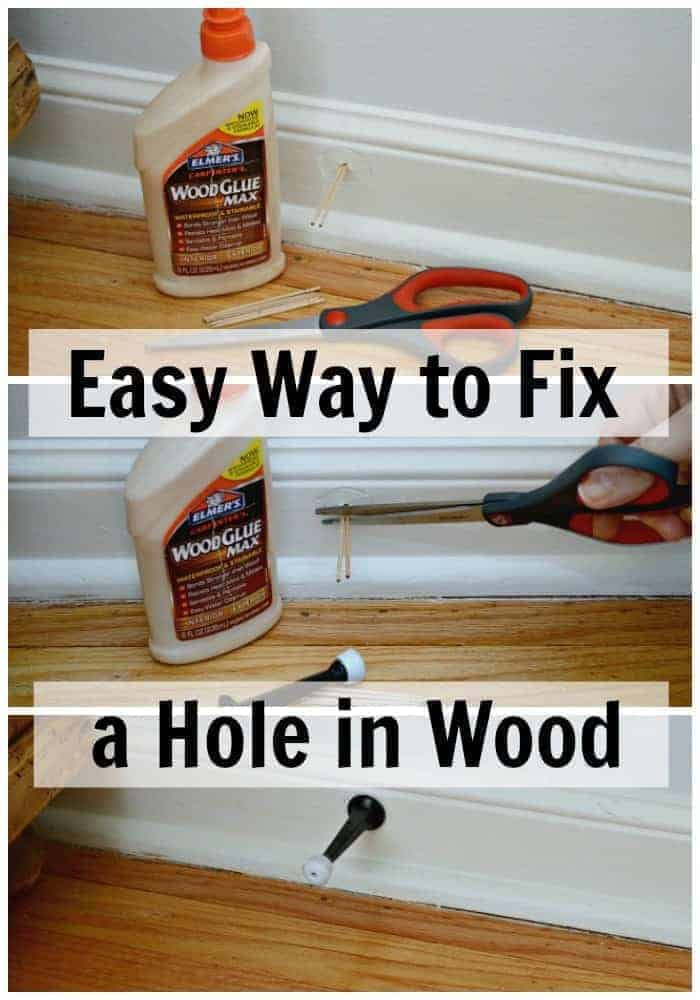
Wooden doors commonly develop stripped screw holes around deadbolt areas due to repeated stress and seasonal wood movement. This is especially common in older homes.
Reinforce Small Stripped Holes with Household Items
For minor stripping where screws hold somewhat but gradually loosen, try this quick fix: Dip 3-4 wooden toothpicks in wood glue and insert them into the stripped screw hole. Break them off flush with the surface, allow 30 minutes for drying, then reinstall the screw. The hardened glue and wood create fresh material for the screw to grip.
Upgrade to Larger Screws for Permanent Hold
When original screws spin freely with no resistance, replace them with #10 or #12 wood screws that are 1/2 inch longer than the originals. The larger diameter and deeper bite provide significantly more holding power in compromised wood. Pre-drill pilot holes slightly smaller than the new screws to prevent door splitting.
Align Your August Lock with Door Hardware
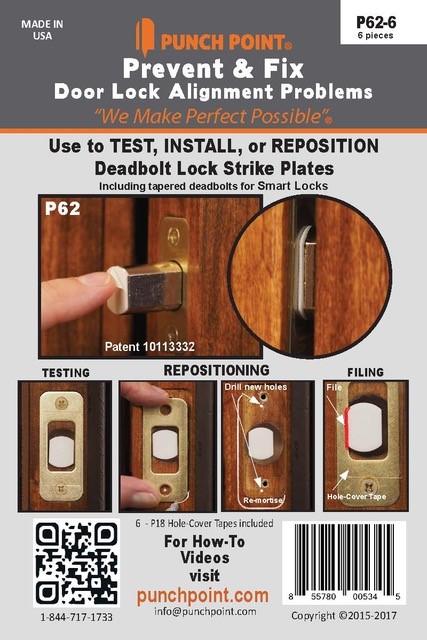
Misalignment between your August Smart Lock and the door’s deadbolt creates stress that eventually loosens mounting hardware.
Check Deadbolt and Strike Plate Alignment
Close your door and observe how the deadbolt enters the strike plate on the door frame. Even 1/8 inch of misalignment forces your August lock motor to work harder, gradually loosening connections. The deadbolt should slide smoothly into the strike plate without rubbing or requiring excessive force.
Adjust Strike Plate Position Correctly
If misalignment is causing stress, loosen the strike plate screws and shift the plate slightly up, down, or sideways as needed. For stubborn cases, use a metal file to enlarge the strike plate hole just enough for smooth operation. Remember to retighten all screws firmly after adjustment.
Prevent Future August Lock Loosening
Stop the wobble before it starts with these simple maintenance habits that extend your smart lock’s lifespan.
Implement Monthly Stability Checks
Set a recurring calendar reminder to gently test your August lock’s stability once monthly. Early detection of minor movement prevents major loosening that damages your door. Address any wobble immediately before it worsens.
Apply Thread Locker to Critical Fasteners
Add a single drop of medium-strength thread locker (blue Loctite works perfectly) to each mounting screw before installation. This prevents vibration-induced loosening while still allowing future removal when needed. Important: Never use permanent (red) thread locker on smart lock components.
Control Door Slamming Damage
Install soft-close hinge pins or add a door closer to prevent violent door slamming—the number one cause of loosened smart locks. The repeated impact from slammed doors gradually works hardware loose, no matter how tightly you initially install it.
Test Your Tightened August Lock Thoroughly
Verification is crucial after any tightening work to ensure proper function and security.
Check Manual Operation Smoothness
Turn your August lock manually using the thumb-turn. Movement should feel solid with no wobbling, grinding, or hesitation. Any roughness indicates misalignment or binding that will cause premature loosening.
Verify App Connectivity and Features
Open your August app and test remote lock/unlock commands. A properly tightened lock will operate smoothly without error messages. Also test auto-lock and DoorSense features to confirm accurate door position reporting.
When to Call for Professional Help
Most August Smart Lock tightening issues can be resolved with basic tools and these techniques. However, if you’ve tried all these solutions and still experience wobble or operational problems, you may need professional assistance. Persistent issues could indicate a warped door frame, severely damaged mounting area, or internal lock mechanism failure requiring replacement.
A properly tightened August Smart Lock provides reliable security and extends your device’s lifespan significantly. By following this guide on how to tighten August Smart Lock components correctly, you’ll maintain optimal performance while protecting your home. Remember that regular maintenance prevents most loosening issues before they compromise your security. Keep those mounting screws snug, and your smart lock will serve you securely for years to come—no expensive replacements needed.