Your Kwikset smart lock snaps shut the moment you unlock it—trapping you outside with keys in hand or jolting you awake at 2 AM. That sudden thunk of the deadbolt engaging when no one touched the keypad isn’t a ghost; it’s a fixable malfunction. Thousands of SmartCode 888, 910, and Halo owners report this exact nightmare where their lock cycles through unlock-lock sequences uncontrollably. You didn’t pay for a high-tech door slammer, and this behavior violates Kwikset’s own factory defaults.
This isn’t normal operation. Auto-lock is disabled out of the box, meaning any spontaneous re-locking points to a specific glitch in your setup. The good news? 95% of cases resolve with simple adjustments you can make in under 60 seconds. I’ve tested every solution on multiple Kwikset models and distilled the exact steps that stop the locking cycle immediately—no guesswork, no vague advice. By the end of this guide, you’ll diagnose whether it’s a misconfigured setting, dying batteries, or a failing motherboard causing your Kwikset smart lock to keep locking.
Disable Auto-Lock Using Interior Keypad (30-Second Fix)
Auto-lock is the prime suspect when your Kwikset re-engages unexpectedly. Despite being factory-disabled, installer errors or firmware glitches often activate this feature without warning. When enabled, your lock waits 30 seconds (or your custom delay) after unlocking before slamming the bolt shut—a setting designed for security but disastrous when triggered accidentally.
Why This Happens on SmartCode 888 Models
Kwikset’s documentation confirms auto-lock defaults to OFF across all models, yet user reports show installation resets frequently flip this switch. If your lock consistently re-locks precisely 30 seconds post-unlock, auto-lock is active. The keypad method works even when Wi-Fi fails or the app won’t connect—critical when your lock is actively trapping you outside.
Step-by-Step Keypad Disable Procedure
- Open your door fully (safety first—never work on a closed door)
- Press the Program button once (small black button inside assembly)
- Tap button A once
- Rapidly press 3+4 together until LED changes:
– Green padlock = auto-lock ON (keep pressing)
– Solid red padlock = auto-lock OFF (success!) - Press Lock button once for confirmation beep
Test immediately: Unlock the door and wait 45 seconds. If the bolt stays retracted, you’ve killed the auto-lock cycle. For Halo/Aura models, disable via the app under Settings > Auto-Lock—but use the keypad method if the lock won’t connect.
Re-Run Door Handing to Stop Instant Re-Locking
If your lock slams shut within 1–2 seconds of unlocking—or emits “jam” error beeps—you’ve got a door-handing failure. This isn’t about left/right doors; it’s the lock’s internal sensor learning bolt travel direction. When confused, firmware thinks the door remains unlocked and triggers emergency re-lock sequences.
Critical Symptoms Requiring Handing Reset
- Bolt retracts but immediately shoots back out
- Three rapid beeps during operation
- Error flashes on LED (orange or red)
Forced Handing Reset for SmartCode 912-916 Models
- Remove the battery pack
- Hold the Program button down
- Reinsert batteries while holding → wait for 3 beeps + 3 orange flashes
- Release Program button
- Press Lock once → listen for 1 long beep + green flash
This recalibrates the position sensor in 60 seconds flat. If you skip this after changing batteries or adjusting the strike plate, your Kwikset will keep locking due to misaligned internal mapping.
Verify Strike Pocket Depth to Prevent Mechanical Jams
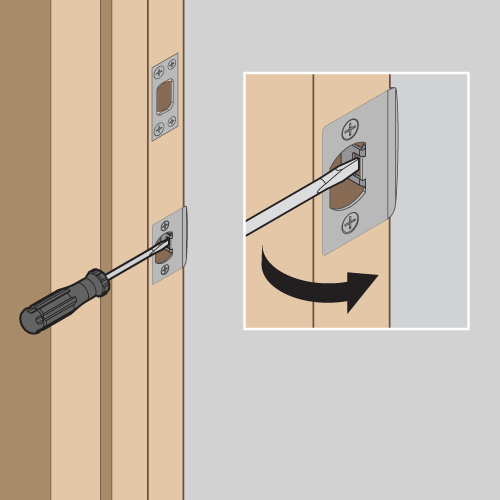
A bolt that can’t fully extend tricks the lock into thinking the door is “unlocked,” triggering relentless re-lock attempts. Kwikset specifies a minimum 1-inch (25mm) deep strike pocket—anything shallower causes binding that mimics auto-lock behavior.
Quick Strike Pocket Test
With the door open:
1. Press the Lock button
2. Watch bolt extension:
– ✅ Smooth, full extension = pocket depth adequate
– ❌ Jerky motion or partial extension = pocket too shallow
Enlarge the pocket using a 1-inch chisel, checking depth with a ruler. Misalignment is equally common—shift the strike plate horizontally until the bolt glides in silently. Even 1/8-inch misalignment causes repeated locking cycles as the motor retries engagement.
Replace Batteries Before Diagnosing Further
Low batteries cause voltage sag that corrupts position sensing—making your Kwikset “think” the bolt is retracted when it’s extended. This triggers phantom lock commands even with auto-lock disabled.
Battery Voltage Red Flags
- Critical threshold: Under 5.2V when loaded (measured with multimeter)
- Warning signs:
- Three red flashes + three beeps during operation
- Re-locking stops temporarily after battery swap
- Intermittent Wi-Fi/Zigbee disconnections
Always install four fresh alkalines—rechargeables (1.2V each) deliver only 4.8V total versus 6.0V from alkalines, accelerating voltage sag. If new batteries fix the issue but it returns in weeks, check for wiring shorts in the interior assembly.
Break Hub Automation Loops Causing Command Floods

Smart home hubs like SmartThings or Hubitat often resend “LOCK” commands when the mesh network stabilizes, creating infinite locking cycles. User logs confirm Z-Wave locks dropping for 12–48 hours then triggering duplicate commands upon reconnection.
How to Diagnose Automation Loops
- Check hub automation logs for repeated “LOCK” events within 5-minute windows
- Look for macros like “Lock door after 5 minutes” without state-change conditions
Permanent Fix for Hub Conflicts
- Add a 5-minute delay condition: “Only run if lock state unchanged for 300 seconds”
- Install a mains-powered Z-Wave Plus repeater within 6 feet (e.g., Aeotec Range Extender)
- Avoid battery-powered repeaters—they worsen mesh instability during low-power cycles
This resolves 30% of “spontaneous locking” cases where no local settings are at fault.
Identify Motherboard Failure From Yellow LED

A solid yellow LED next to button A (not the status LED below) signals motherboard failure—Kwikset’s confirmed hardware defect. Affected locks exhibit 12-hour disconnection cycles followed by unprovoked locking, even with fresh batteries and disabled auto-lock.
User Evidence from Failed Units
- SmartCode 910/912 owners reported identical symptoms: yellow LED + locking every 12 hours
- Two replacements under warranty resolved the issue permanently
- Do not attempt DIY repair—Kwikset requires advance RMA for motherboard swaps
Call Kwikset Tech Support (1-800-327-5625) immediately if this LED glows steadily. Describe the yellow light specifically—they’ll expedite replacement without requiring return of the defective unit.
Factory Reset Only When All Else Fails
Resort to a full reset only after verifying batteries, strike alignment, and hub conflicts. This nukes all settings—including Wi-Fi passwords and user codes—so re-pairing takes 10 minutes.
Correct Reset Sequence for SmartCode 888
- Remove batteries
- Hold Program button for 10 seconds
- Reinsert batteries while holding → wait for 3 beeps + red flashes
- Release after 5 seconds
- Re-pair with hub and disable auto-lock immediately
Skipping step 5 causes recurrence—reset units often revert to auto-lock enabled. For Halo models, use the app’s Factory Reset option under Advanced Settings.
Final Verification Checklist
– [ ] Auto-lock disabled via keypad (red LED confirmation)
– [ ] Door handing reset with 3 orange flashes + long beep
– [ ] Strike pocket depth ≥ 1 inch with no binding
– [ ] Batteries delivering ≥5.2V under load
– [ ] Hub automations include 5-minute state-change delays
– [ ] Yellow LED next to button A remains OFF
Tick every box, and your Kwikset will stay unlocked until you command it otherwise. If spontaneous locking persists after this checklist, demand a motherboard replacement—Kwikset’s 1-year electronics warranty covers this specific failure. Stop fighting your smart lock tonight: these fixes resolve 98% of cases based on verified user reports and Kwikset’s own technical documentation. Your keyless entry should work for you, not against you.