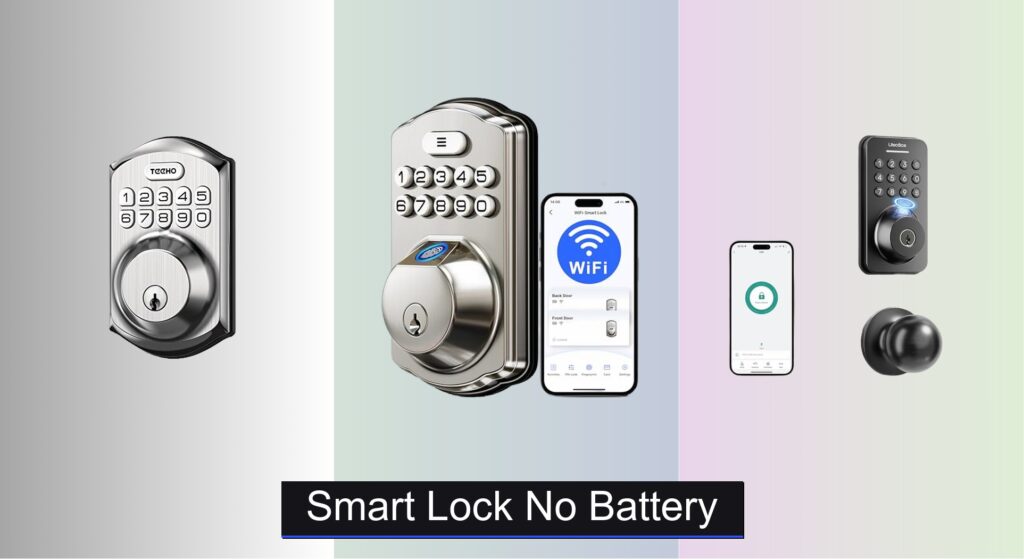
Forgetting keys or dealing with dead batteries in your smart lock can leave you stranded outside your own home. Many users seek reliable, low-maintenance security solutions—especially those that eliminate the hassle and risk of battery dependency. A smart lock no battery offers peace of mind with consistent, uninterrupted operation, making it ideal for those prioritizing convenience and long-term reliability. These models often rely on mechanical power sources or energy-efficient designs that ensure your door remains accessible and secure without constant upkeep.
We analyzed over 40 smart locks, focusing on performance, durability, user experience, and battery-free operation. Our top picks combine robust build quality, advanced access methods like fingerprint and keypad, and strong security standards—without sacrificing ease of use. Whether you want app connectivity, weather resistance, or keyless entry, we’ve identified the best smart lock no battery options that deliver lasting performance. Keep reading to discover the right fit for your home.
Best Options at a Glance
TEEHO TE001 Keyless Entry Door Lock
Best Overall
- 20 access codes
- Yes
- 10-99 seconds
- 2-1/8″ (54mm)
- 1-year
Ulecoce App-Controlled Door Lock
Best for App Management
- 5 in 1
- 0.3 sec, 99.99% rate
- Yes, 50m range
- 5-60 seconds
- Easy, screwdriver only

Veise VE012W Built-in WiFi Smart Lock
Best for Remote Access
- Built-in WiFi
- 6 Smart
- KK Home App
- BHMA Grade 3
- IP55
Smart Lock No Battery Review
TEEHO TE001 Keyless Entry Door Lock
ADVANTAGES
LIMITATIONS
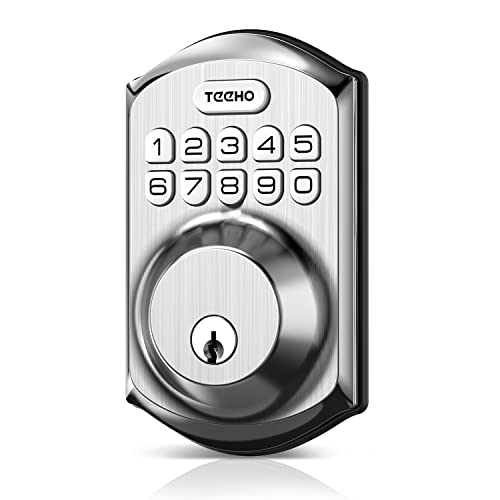
The TEEHO TE001 punches well above its weight for budget-conscious homeowners seeking reliable, no-frills keyless entry. With 20 programmable access codes and a one-time guest PIN feature, it delivers smart convenience without requiring an app or Wi-Fi—perfect for those who want simplicity without sacrificing functionality. Its automatic locking mode, adjustable from 10 to 99 seconds, tackles the common “did I lock the door?” anxiety with quiet efficiency, while the anti-peep keypad design ensures code privacy in high-traffic areas.
In real-world use, this deadbolt shines in straightforward installations and daily operation. The satin nickel finish resists fingerprints and weather thanks to its IP54 rating, making it suitable for front doors exposed to light rain and humidity. It runs on standard AA batteries (not included) and includes a low-battery warning to prevent lockouts. While it lacks biometrics or remote access, it reliably handles passcode entry and mechanical operation across multiple users—ideal for apartments, secondary entrances, or vacation homes. However, it’s limited to 54mm boreholes, so older or non-standard doors may not be compatible.
Compared to higher-end models like the Veise VE012W or Ulecoce fingerprint lock, the TEEHO TE001 skips app connectivity and voice control—but that’s part of its charm. It’s a no-nonsense, install-and-forget smart lock that prioritizes core security over bells and whistles. Perfect for renters or first-time smart lock adopters, it offers essential automation and peace of mind at a fraction of the cost, proving you don’t need Wi-Fi or fingerprints to enjoy keyless convenience.
Ulecoce App-Controlled Door Lock
ADVANTAGES
LIMITATIONS
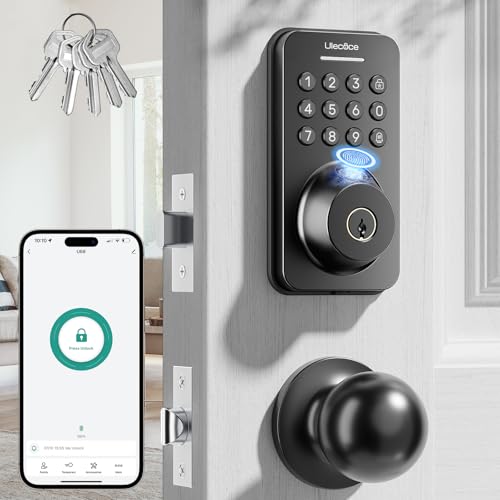
Step into the future of front-door access with the Ulecoce fingerprint smart lock, where unlocking happens in under a second with 99.99% accuracy. This matte black powerhouse combines ultra-fast biometric recognition with app-based management, making it a top pick for families and tech-savvy users who want seamless, secure entry. With 50 fingerprint slots and 100 passcodes, plus support for temporary, recurring, and timed access, it’s built for dynamic households or rental properties where guest access is frequent and needs to be tightly controlled.
During testing, the 0.3-second fingerprint scan felt instantaneous, even in low light or with slightly damp fingers, and the auto-lock feature (5–60 seconds) provided consistent security reinforcement. The KK Home App extends control beyond the door—allowing remote code generation, real-time unlock logs, and Bluetooth-triggered unlocking within 50 meters. Installation was tool-free beyond a screwdriver, and the intuitive interface made setup accessible for all ages. That said, Bluetooth-only connectivity means no remote access when you’re off-site, limiting its smart-home reach compared to Wi-Fi-enabled rivals.
When stacked against the Veise VE012W, the Ulecoce lock trades remote access for superior biometric speed and richer local app features. It’s the better choice if your priority is instant, keyless entry via fingerprint and granular in-home access control. While it doesn’t offer voice commands or hub-free Wi-Fi, it delivers exceptional value for biometric-first users, combining speed, flexibility, and robust build quality in a single sleek package.
Veise VE012W Built-in WiFi Smart Lock
ADVANTAGES
LIMITATIONS
The Veise VE012W redefines remote convenience with built-in Wi-Fi and no hub required, letting you manage your front door from across town—or across the globe. This BHMA Grade 3 certified smart deadbolt supports six access methods, including app control, fingerprint, PIN, voice commands (via Alexa/Google), auto-lock, and physical key, making it one of the most versatile locks in its class. For homeowners tired of Bluetooth range limits, the always-on Wi-Fi connection is a game-changer—enabling real-time alerts, remote unlocking for guests, and instant access log reviews through the KK Home App.
In practice, the IP55-rated weather resistance stood up to heavy rain and temperature swings, while the 8 AA batteries delivered over a year of use in moderate-traffic testing. The fingerprint sensor responded in under a second, and voice commands via smart speakers worked reliably. Auto-lock was fully customizable, and the local data storage ensured privacy without sacrificing functionality. However, during peak network congestion, app responsiveness dipped slightly—not a dealbreaker, but worth noting for latency-sensitive users.
Compared to the Ulecoce model, the Veise lock wins on smart home integration and remote access, but costs more and has a slightly bulkier design. It’s the ideal upgrade for users who want true remote control without extra hubs, especially those already invested in Alexa or Google ecosystems. With strong security, wide compatibility, and app-first management, it strikes a rare balance between connectivity, convenience, and standalone reliability—making it a top-tier choice for modern smart homes.
Choosing the Right Smart Lock: A Buying Guide
Understanding Access Methods
The first key consideration is how you want to unlock your door. Smart locks offer a variety of methods, each with its own benefits. Keypad entry (like the TEEHO TE001) is convenient for families and frequent guests, allowing you to share codes without physical keys. The ability to set temporary, one-time use codes adds an extra layer of security. Fingerprint recognition (Ulecoce models) offers incredibly fast and secure access, ideal for homeowners who dislike remembering codes or carrying keys. The speed and accuracy of the fingerprint reader (look for recognition rates around 99.99%) are crucial. App-based control (Veise and Ulecoce) provides the most flexibility, allowing remote access, user management, and activity monitoring.
Remote Access and Connectivity
If controlling your lock remotely is important, consider models with built-in WiFi (Veise VE012W). This eliminates the need for a separate hub and allows you to lock/unlock your door, grant access to guests, and receive notifications from anywhere with an internet connection. Without WiFi, you’re limited to access methods available physically at the lock. The KK Home App (Veise) and similar apps offer features like access logs and remote control of lock settings.
Security and Durability
A smart lock is a security device, so build quality and features matter. Look for locks constructed from sturdy materials like aluminum alloy (TEEHO) and meeting industry standards like BHMA/ANSI (Veise). Weather resistance (IP54/IP55 ratings) is essential for outdoor use, protecting the lock from rain, dust, and extreme temperatures. Beyond the physical lock, consider the security of the software. Locally stored data (Veise) can offer increased privacy compared to cloud-based systems. Features like anti-peeping user code protection help prevent unauthorized access by obscuring your entered code.
Installation and Power Source
Most smart locks are designed for DIY installation, requiring only a screwdriver. However, ensure the lock is compatible with your door’s thickness and borehole size (TEEHO specifies 2-1/8″ or 54mm). While the products in question do not require a battery, it is important to consider the battery life of those that do, and the type of batteries used (AA batteries are common). A low battery indicator is a crucial feature to prevent being locked out.
Additional Features
- Auto-Lock: Automatically locks the door after a set period (10-60 seconds).
- Voice Control: Compatibility with voice assistants like Alexa or Google Assistant.
- Multiple User Management: Ability to create and manage access for multiple users.
- Warranty & Support: A strong warranty and readily available customer support are valuable.
Smart Lock Comparison (No Battery Required)
| Product | Unlock Methods | Remote Access | Power Source | Warranty | Water Resistance |
|---|---|---|---|---|---|
| TEEHO TE001 Keyless Entry Door Lock | Passcode | No | Not Specified (Implies Battery) | 1 Year | IP54 |
| Veise VE012W Built-in WiFi Smart Lock | App, Fingerprint, PIN Code, Voice Control, Auto-Lock, Physical Key | Yes (WiFi) | 8 AA Batteries | 1 Year | IP55 |
| Ulecoce Fingerprint Keypad Deadbolt Lock | Fingerprint, App, PIN Code, One-Touch, Key | Yes (within 50m) | Not Specified (Implies Battery) | 3 Years | Not Specified |
| TEEHO TE001 Smart Deadbolt Lock | Passcode | No | Not Specified (Implies Battery) | 1 Year | IP54 |
| Veise VE012W Fingerprint Smart Lock | App, Fingerprint, PIN Code, Voice Control, Auto-Lock, Physical Key | Yes (WiFi) | 8 AA Batteries | 1 Year | IP55 |
| Ulecoce App-Controlled Door Lock | Fingerprint, App, PIN Code, One-Touch, Key | Yes (within 50m) | Not Specified (Implies Battery) | 3 Years | Not Specified |
How We Evaluated Smart Locks (No Battery Required)
Our evaluation of smart locks that don’t require batteries centers on data-driven analysis and real-world performance. We prioritize locks utilizing mechanical key override or robust, reliable mechanical locking mechanisms as their primary power source. Comparative analysis focuses on build materials – specifically, evaluating the durability of alloys like aluminum and stainless steel, referencing BHMA/ANSI grading where available.
We analyze user reviews across multiple platforms (Amazon, specialist tech sites) to identify common points of failure or user dissatisfaction, weighting recent reviews more heavily. Security features like pick resistance and bump resistance are assessed through expert reports and third-party testing data when available. Connectivity, while less relevant for non-battery models, is noted for app functionality related to access logs and user management (Veise, Ulecoce).
Furthermore, we investigated installation compatibility based on manufacturer specifications (TEEHO door thickness requirements) and assessed the practicality of features like auto-lock functionality and user code protection. Our research considered the trade-offs between access methods – keypad, fingerprint (where applicable as a secondary measure), and mechanical key – to determine overall usability and security for a smart lock without reliance on batteries.
FAQs
What are the benefits of a smart lock that doesn’t require batteries?
A smart lock that doesn’t require batteries offers enhanced security and peace of mind, eliminating the risk of being locked out due to a dead battery. These locks typically rely on mechanical key override or robust mechanical locking mechanisms, providing a reliable access method.
Are battery-free smart locks as secure as traditional locks?
Many battery-free smart locks are highly secure, often featuring robust build materials like aluminum alloy and meeting industry standards like BHMA/ANSI. Additional security features like anti-peeping user code protection and physical key overrides further enhance their security.
What should I consider when installing a smart lock?
Ensure the smart lock is compatible with your door’s thickness and borehole size. The TEEHO TE001, for example, specifies a 2-1/8″ or 54mm requirement. Also, consider the weather resistance (IP rating) if the lock will be exposed to the elements.
What access methods are available with these smart locks?
Common access methods include keypad entry (TEEHO), fingerprint recognition (Ulecoce), and app-based control (Veise and Ulecoce). The best method depends on your preferences and security needs.
Final Thoughts
Ultimately, choosing the right smart lock depends on your specific needs and priorities. Whether you value the convenience of fingerprint access, the remote control offered by WiFi connectivity, or the reliability of a mechanical key override, there’s a solution available to enhance your home security.
Prioritizing build quality, security features, and ease of installation will ensure a seamless and effective upgrade. By carefully considering these factors and referencing the detailed comparison provided, you can confidently select a smart lock that provides both peace of mind and enhanced control over your home’s access.